What I use – Nikon Df
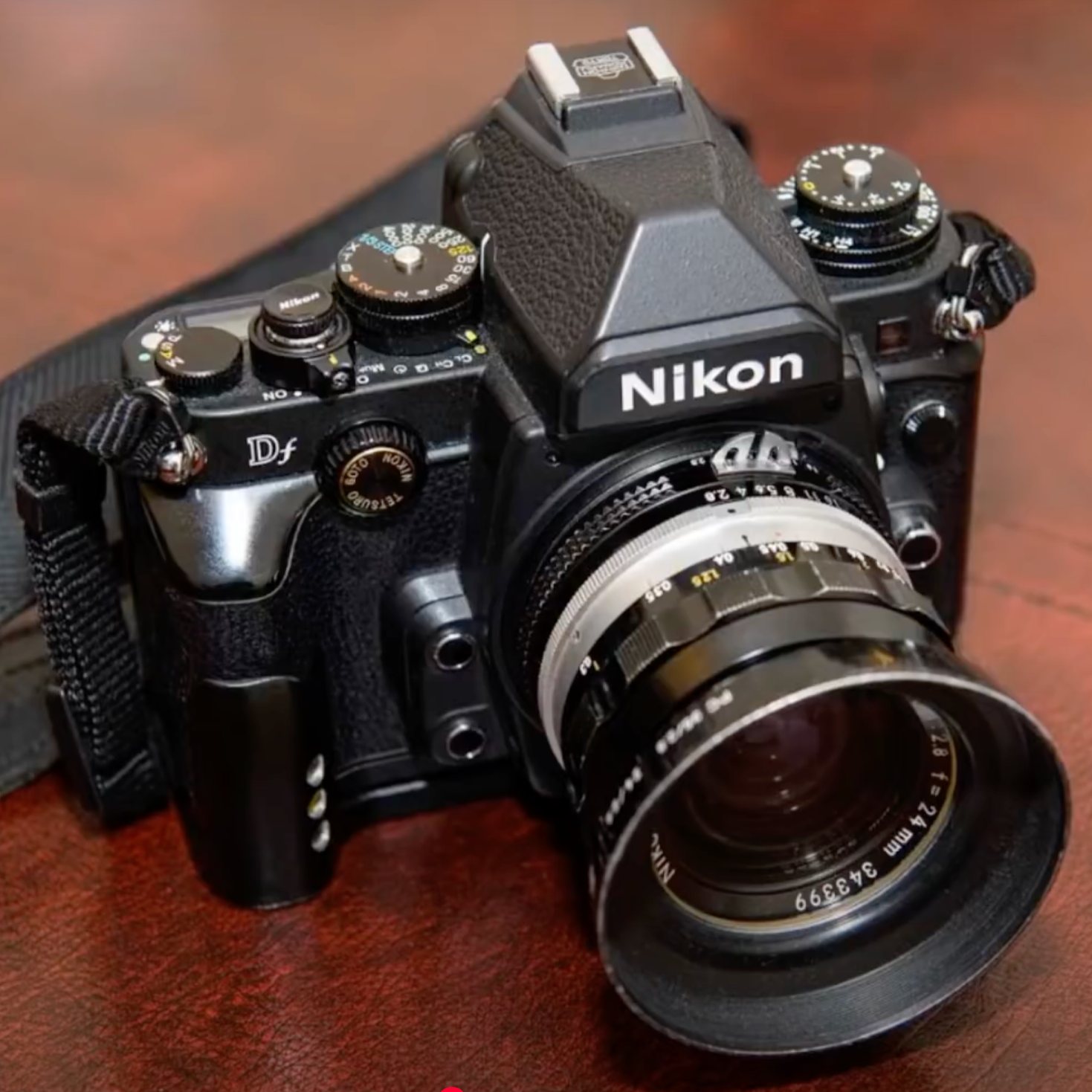
Above: The humble Nikon Df (personal camera of Nikon designer Mr Tetsuro Goto). Image: Grays of Westminster
Wait. What? In 2026? Yep, a Nikon Df.
The Df was a polarising camera when it was released in 2013 but more than ten years’ later, when all the digital hoo-hah is finally dying down, the beauty of the Df is catching up to those who missed it first time round.
I wanted one the moment I saw one. My thinking at the time, and having watched the evolution of the D1, D2, D3 and D100, D200, D300 and various counterparts from other manufacturers was, ‘Why can’t they just put a sensor where the film normally goes and leave everything else alone?’ The Df—digital fusion—was about as close to that as we were going to get at the time. But it came with interesting criticisms: one card slot, no video, the same autofocus system from the much-panned D600...
At a time when the Nikon D4 ruled the professional digital roost, when the D800 was blowing everything away with its 36-megapixel sensor, and the D750 with its light weight, flippy screen and 24 megapixels became a DSLR video dream and gave the much-loved Canon 5D some much-needed competition, the Df was an awkward release.
Digital was on the up and up. It just got better and better: more features, more capability, full frame, more megapixels, incredible video and audio, faster and faster autofocus, increased low-light performance. And then, in amongst it all, the Df appeared and no one really knew what to do with it.
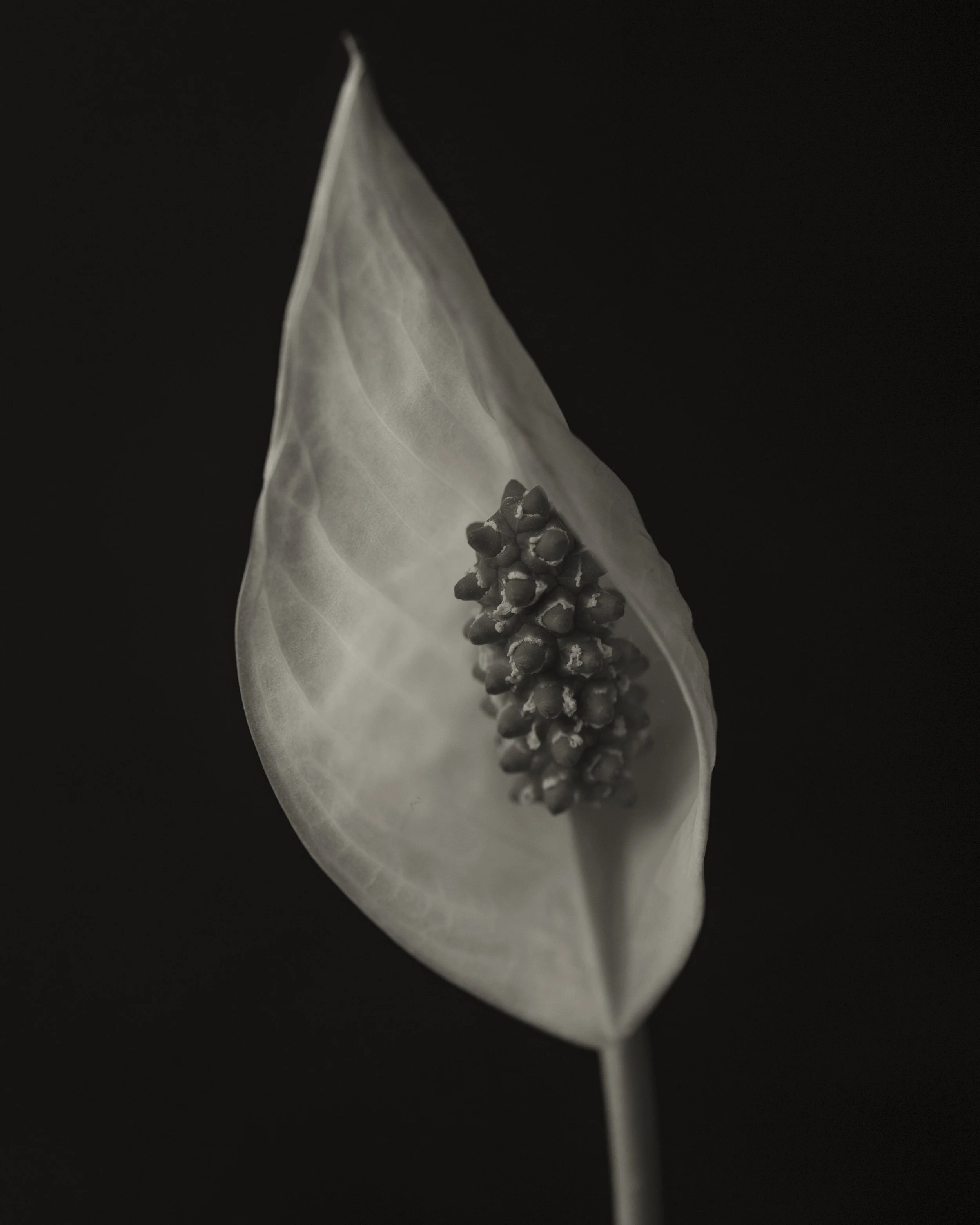
Above: Peace Lily. Nikon Df, Nikkor 55mm micro f/2.8 © Matthew Smeal 2026
It was like Nikon hit pause on the ever-advancing digital wizardry, took a breath, and made a camera for the old guys, a thank you for the years of loyalty while giving them entrée into the digital world. And here’s where things got missed: for those of us who grew up shooting film, the one slot, no video and poor autofocus/low-light performance was irrelevant. We only ever had one roll of film, those who needed to had separate video cameras for shooting video, and many preferred manual focus lenses anyway and had shelves, drawers and cupboards full of legacy Nikon glass. The Df wasn’t missing anything to them but gave them everything they were used to in a digital package.
The Df was designed by famed Nikon designer, Tetsuro Goto. If you have used any Nikon film camera from the F3 to the F6, or Nikon digital from the from the D1 to the D3s, you have held his work in your hands. But the Df was a personal project.
‘My favourite camera is the Nikon Df,’ Mr Goto said in an interview with Simon Stafford for Nikon Owner. ‘My thoughts were what sort of camera would I want to buy and own for myself? So I designed, planned and persuaded many of our staff members to [create] the Df. That is why I like the Df so much; it is my favourite!’
Photos of Tetsuro Goto with or of his personal Df reveal so much about the man and about the camera. There is some interesting pimping: a shutter button, name-inscribed insert for the front dial, an extension ring for the on/off switch, gold lettering for the MASP dial, a hot shoe cover with the traditional Nippon Kogaku Tokyo logo, and a hand grip.
But it is the lens that tells me everything about who this camera is for. It is not the latest AF-S f/1.4, but an old manual focus wide angle Nikkor – a Nikkor-N Auto 24mm f/2.8. The lens was released around 1970 so is therefore not even the last of Nikon’s manual focus lenses from pre-AI days, resplendent with its scalloped focus ring and worn metal lens hood. Like many lenses from that era, Mr Goto’s has been converted to AI (auto indexing). Even if it hadn’t, a flip out tab allows the Df to take non-AI lenses (like the F3) but means the photographer needs to meter using stop-down metering, a light meter, or sunny 16.

Above: Tracey. Natural light portrait. Nikon Df, Nikkor 50mm AIS lens. © Matthew Smeal 2026
It’s no surprise that the Df was a disappointment to so many people when it was released in the midst of a very exciting time in digital photography. But make no mistake: this is a photographer’s camera; this is a camera for someone who knows what they’re doing, knows what they like, and for someone who doesn’t get caught up in pixel peeping but goes quietly about their business and takes outstanding images – for themselves. Did Nikon make a mistake? I don’t think so. Did they misread the market? Possibly. Were they ahead of their time? Definitely.
If you look now at Leica M11, Fuji X-T5, OM Systems (Olympus) OM-3 and others—and even Nikon who have returned to the concept with the Nikon Zf, it appears that everyone has finally caught up. Dials are back and so too the pre-digital design aesthetic. The simplicity of the camera as a tool was missing, the ability to concentrate on the craft and not be trapped in endless menus. I wonder if Tetsuro Goto saw this and missed this. Perhaps he wanted his legacy to be a return to the simple joy of photography.
Let’s address some criticisms. When the D800 had 36 megapixels and the D750 had 24, Goto chose the same sensor as the D4: 16 megapixels. But time has shown that it is a stunning sensor, one that renders skin tones and colours with a gorgeous quality that is hard to describe but creamy is used often.

Above: Tiger grass flower. Nikon Df, Nikkor AIS 85mm © Matthew Smeal 2025
Like many things in life, great is the enemy of good. Despite the panning, the D600 autofocus system used in the Df is perfectly fine, if you want to use AF, that is.; Goto-san doesn’t rely on AF, but it’s there if you need it. Henri Cartier-Bresson didn’t use AF either.
One card slot, well, so what? When you shoot film, you can only shoot one roll at a time and that stays with you until you can get it to a darkroom. The Df takes you back there: put a card in the camera and go and take photos. Let’s keep it simple.
No video. Well, it’s a stills camera, not a video camera. My F3 doesn’t shoot video, nor does my F4 or FM3A. Or my F, my FE2, Nikkormat FTN, or Nikonos V, or my Mamiya RZ67 Pro II for that matter. However, my Panasonic HC-X2 professional camcorder is a fantastic video camera, which is why I bought it. It doesn’t do stills though. Different tools for different jobs. Why are we suddenly judging stills cameras by their video capability?

Above: That sensor! Creamy is often used to describe its characteristic. © Matthew Smeal 2025
With such obvious love of my Df, you may be wondering why it took me so long to get one. My work back then required me to travel light and shoot both stills and video. For the run-and-gun video work I needed to do in the field, DSLR’s were a hugely viable option. As a trained cinematographer and someone who shot a lot of Betacam SP back in the day, I was astounded by the quality of footage and audio I could capture on a single camera. And I still shot film and still do. I have two D750’s which I used a lot for work, but I always carried a Nikon FM3A with me – and a lot of Ilford HP5. When I had a moment to shoot for myself, I shot on film.
But film is expensive; so are chemicals and the developing and scanning process is time consuming. Sometimes, I just want to have a camera with me: I might be on holiday, out with friends or heading off to do almost anything where I might want to throw a camera in my bag, just in case. Digital gives me that option. Yes, a D750 would work perfectly in that situation, but the Df is much closer in look and feel to the film cameras I know and love: my FM3A, FE2, F, and F3.
At its core, photography is aesthetic, and that includes the tools. If we respond to the camera in our hands, the way the lens looks and feels, and the quality of how a sensor captures an image, then we’re back to an important part of photography – beauty. In the AI-generated, Chat GPT-written, sterile world that we live in, the tools we use are too often created and driven by marketing departments and aimed at people who want features and stats. I suspect Tetsuro Goto knew this and convinced Nikon to make a camera that would return us to the simplicity and joy of wandering around with a camera. The Df may seem stark compared to other cameras from its time, but Goto has removed the superfluous and given us beauty in simplicity.
As noted with Tetsuro Goto’s own Df, it’s a camera to carry with you, a trusted companion that will remain faithful for many years. It’s not a camera that will be traded in or relegated to the back of the shelf every time megapixel counts go up and autofocus becomes faster with more AF points to choose from.
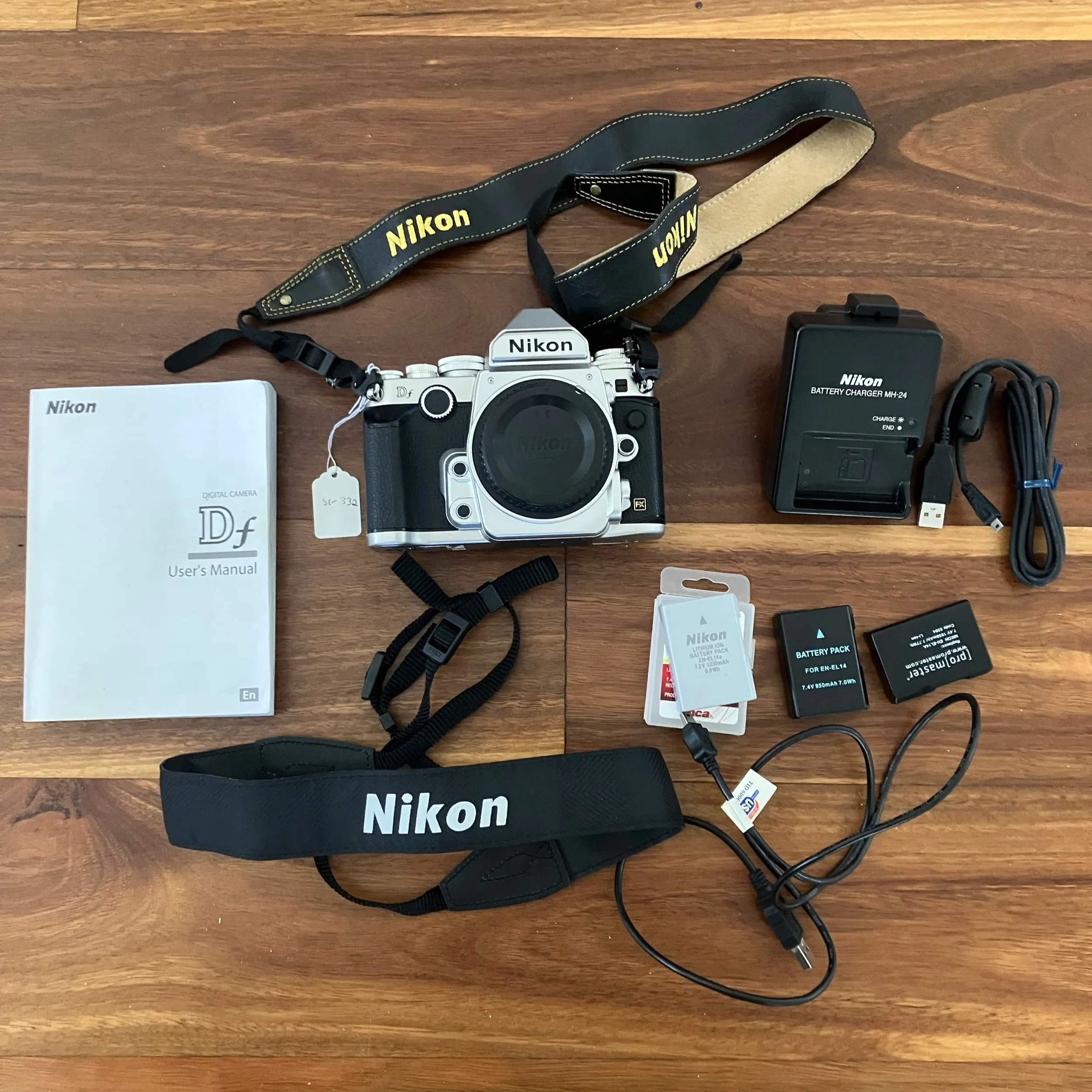
Above: What a find! © Matthew Smeal 202
I was extremely lucky and found a pristine silver example in a reputable camera chain store for $1000. It came with four batteries (two Nikon, two aftermarket), two straps including a beautiful Nikon leather and suede version, a charger, and a shutter count of 334! My own pimping is a rubber eye cup and only using it with my Nikkor AIS lenses. I bought a Domke F-6 bag so I had a simple kit, but it may just as easily be found in my Billingham Hadley Pro or rolling around the bottom of my swim bag strapped to the back of my motorbike on my way to the beach each morning.
The more I use my Df, the more I love it. It’s my ‘go anywhere’ camera. While I’ll always be a film shooter, whenever I simply want a camera with me, I’ll take my Df.